Make It Visible
Place cues for desired behaviors in obvious locations. If you want to read more, put books where you naturally sit. Visual triggers prompt action without conscious effort.
Strategic space optimization that makes desired behaviors the path of least resistance
Your environment shapes your behavior more than willpower alone. By strategically designing your spaces, you create automatic triggers that support your desired routines without constant mental effort.
Research in behavioral science consistently shows that environmental cues significantly influence our daily choices. When you optimize your surroundings, you reduce friction for positive behaviors and increase friction for those you want to minimize.
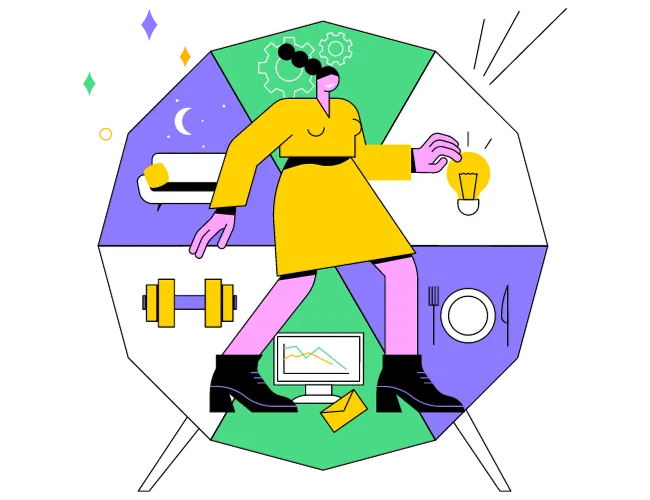
Four fundamental strategies for optimizing your surroundings
Place cues for desired behaviors in obvious locations. If you want to read more, put books where you naturally sit. Visual triggers prompt action without conscious effort.
Remove obstacles between you and positive actions. The fewer steps required, the more likely you are to follow through. Prepare your environment in advance.
Designate specific areas for specific activities. When a space is associated with one behavior, entering that space triggers the associated routine automatically.
Practical steps to adjust your spaces to support better habits
Walk through your spaces and note what behaviors they currently encourage. Identify friction points that block desired routines and triggers that lead to unwanted patterns.
Place visual cues strategically. Put workout clothes by your bed for morning exercise, keep a water bottle on your desk, position books where you typically scroll your phone.
Make negative habits harder to execute. Remove apps from your home screen, put snacks in inconvenient locations, log out of streaming services after each use.
Environment design is an ongoing process. Regularly assess what's working and adjust. Small tweaks compound into significant behavioral shifts over time.
All materials on this website are free educational content for general well-being and personal development. They are not medical, psychological, or therapeutic advice and do not diagnose, treat, cure, or prevent any condition. Individual results vary; we make no guarantee of specific outcomes. Before implementing any practice — especially with chronic conditions, pregnancy, or medication — consult a qualified healthcare professional. Advertising on third-party platforms (including Google Ads) does not change the informational nature of this site.
Combine environment optimization with our structured 30-day educational guides for consistent daily practice.